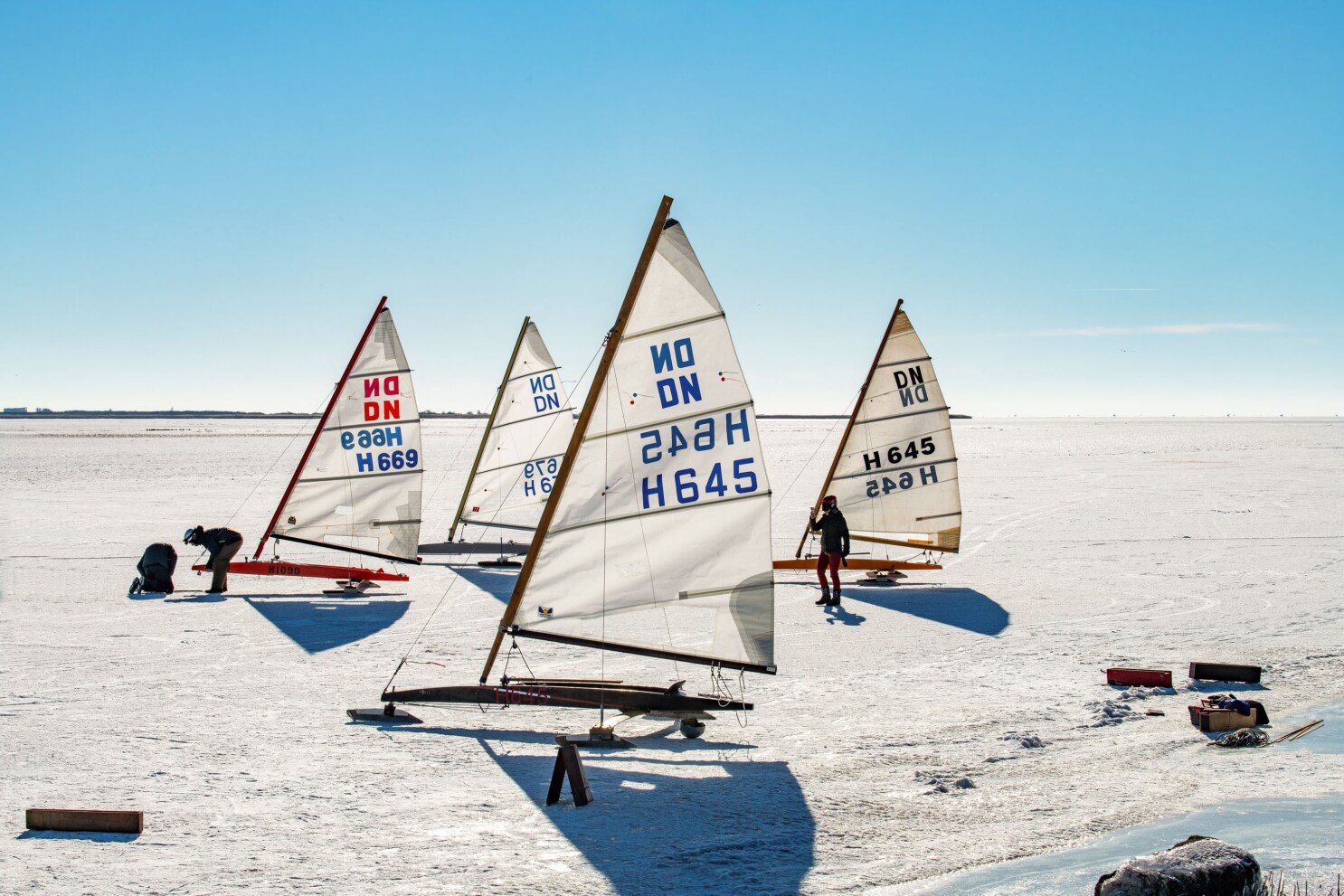
The thrill of turning brutal winter cold into pure adrenaline is something special. When temperatures plummet and lakes freeze solid, most people bundle up and complain about the chill. But a dedicated crowd sees opportunity: they haul out sleek sailboats fitted with sharp metal runners and race across the ice at speeds that make cars look slow. This is ice sailing—or ice yachting, iceboating, hard-water sailing—depending on who you ask. From the historic frozen stretches of New York’s Hudson River valley to the vast, glassy bays of Finland, it’s a sport that transforms winter’s harshness into exhilarating freedom.
I remember my first glimpse of it years ago on a trip upstate. The wind howled, the ice gleamed under a pale sun, and these low-slung craft zipped by like missiles. No engine roar, just the hiss of steel on ice and the snap of sails. It felt otherworldly. If you’ve ever felt trapped by a long winter, this might be the antidote.
What Exactly Is Ice Sailing?
Ice sailing involves piloting a wind-powered vessel across frozen surfaces on metal runners instead of keels or hulls in water. The boats look like minimalist sailboats stripped down for speed: a narrow cockpit or platform, a tall mast, and three sharp blades—one steerable at the front or rear, two fixed on a cross plank.
The physics are addictive. Low friction lets these boats exploit apparent wind, accelerating far beyond true wind speed. On a good day with steady breeze, expect 50-80 mph routinely, with records pushing over 100 mph in larger classes. It’s not gentle cruising; it’s raw, exposed velocity with no brakes—just skill, timing, and nerve.
A Brief History: From Dutch Canals to American Rivers
The roots trace back to 17th-century Netherlands, where farmers rigged crude sails on sleds to haul goods over frozen canals. Dutch settlers carried the idea to New Amsterdam (now New York) in the 1800s, adapting it to the Hudson River’s wide, flat expanses when it froze.
By the late 19th century, ice yachting exploded in popularity along the Hudson. Wealthy families built massive stern-steerers—elegant wooden beasts up to 60 feet long—racing for prestige. Theodore Roosevelt was an avid enthusiast, commissioning custom boats and dominating challenges. Clubs formed in Poughkeepsie, Newburgh, and nearby areas, turning the river into a winter racetrack.
In Europe, the tradition evolved differently. Nordic countries like Finland embraced smaller, more accessible designs suited to their thousands of lakes. Today, Finland hosts major international events, blending tradition with modern competition.
The Iconic DN Class: The People’s Iceboat
The most widespread class worldwide is the International DN, born from a 1937 contest sponsored by The Detroit News (hence “DN”). It’s a one-design boat: about 12 feet long, 60 square feet of sail, weighing around 100 pounds, and built for one sailor.
- Affordable — Kits or used boats start low compared to other yachts.
- Portable — Disassembles to fit in a car trunk.
- Thrilling — Hits 60+ mph easily, demands precise handling.
DN fleets thrive globally, with annual World Championships alternating between North America and Europe. In 2026, events included the Gold Cup in Poland/Sweden and Grand Masters in Finland.
Ice Sailing in New York: Hudson Valley Legacy
New York’s ice sailing heritage centers on the Hudson River and nearby lakes like Orange, Greenwood, and Ronkonkoma. The Hudson River Ice Yacht Club (founded 1885) preserves historic stern-steerers like Ariel and Hound.
A standout recent moment: In early 2026, a brutal cold snap froze the Navesink River in New Jersey thick enough for the rare Van Nostrand Cup revival. This Tiffany silver trophy, first awarded in 1886, pitted the Hudson River club against the North Shrewsbury Ice Boat & Yacht Club. After 135 years and only a handful of contests (last in 2003), the Hudson team reclaimed it with Ariel in a best-of-three series. Antique wooden boats, no brakes, speeds up to 75 mph—pure history in motion.
Clubs like the Four Lakes Ice Yacht Club (though Midwest-based) connect enthusiasts, and Long Island’s Lake Ronkonkoma hosts active fleets on its quick-freezing shallows.
Ice Sailing in Finland: Nordic Heartland
Finland boasts some of the world’s best ice conditions—vast lakes and bays that freeze reliably and stay clear. The DN class dominates here, with strong national fleets and events like Finnish Nationals and international rankings.
The IDNIYRA Europe calendar regularly features Finland for Gold Cup qualifiers, Junior Worlds, and Grand Masters. In 2026, Finland hosted the Grand Masters Championship, drawing top veterans. Smaller classes like Ice Optimist introduce kids early.
Finnish sailors often train on Pärnu Bay (near Estonia) or home waters, emphasizing technique in variable winds. The community is welcoming; groups like DN Finland organize try-outs and regattas.
How Fast Do Iceboats Really Go? A Quick Comparison
| Class | Typical Top Speed | Sail Area | Crew | Notes |
|---|---|---|---|---|
| DN (International) | 50–80 mph | 60 sq ft | 1 | Most popular, accessible |
| Skeeter (C or larger) | 80–100+ mph | Unlimited | 1–2 | High-performance, custom |
| Stern-Steerer (A Class) | 60–90 mph | Large | 2–6 | Historic, heavy, team effort |
| Ice Optimist | 30–50 mph | Small | 1 (youth) | Beginner/kid trainer |
Iceboats outpace water sailboats because friction is minimal—think downhill skiing with wind instead of gravity.
Pros and Cons of Getting Into Ice Sailing
Pros
- Unmatched speed and excitement on calm days.
- Winter activity that reclaims the season.
- Community-focused clubs offer mentorship.
- Relatively low entry cost for DN class.
- Portable and storable.
Cons
- Dependent on rare perfect ice (clear, thick, snow-free).
- High risk—crashes at speed hurt.
- Cold exposure demands gear (helmets mandatory).
- Short season in many places.
- Learning curve for apparent wind handling.
Safety Essentials and Getting Started
Always wear a helmet—ice is unforgiving. Layers, windproof gear, and ice picks (for self-rescue if you break through) are non-negotiable. Check ice thickness (minimum 4-6 inches for small boats) and avoid cracks or pressure ridges.
To try it:
- Join a club like Hudson River Ice Yacht Club or DN Finland.
- Look for “try-out” days or junior programs.
- Buy a used DN—sites like iceboat.org have listings.
- Watch regattas first to feel the vibe.
People Also Ask
What is iceboating?
It’s sailing on frozen lakes or rivers using boats with metal runners instead of hulls, reaching high speeds with wind power.
How fast can ice sailboats go?
DNs commonly hit 50-80 mph; larger classes exceed 100 mph in ideal conditions.
Where can I try ice sailing in the US?
New York’s Hudson Valley, Midwest lakes (Wisconsin, Minnesota), and spots like Lake Champlain offer clubs and events.
Is ice sailing in Finland popular?
Yes—it’s a Nordic stronghold with strong DN fleets, national championships, and international hosting duties.
Do you need special skills for ice sailing?
Sailing experience helps, but the apparent wind and steering on runners take practice. Clubs provide training.
FAQ
Is ice sailing dangerous?
It carries risks like high-speed falls or thin ice, but helmets, club rules, and experience minimize them. Many call it safer than road racing due to open space.
How much does a DN iceboat cost?
Used ones range from $1,000–$5,000; new builds around $3,000–$6,000 plus sails.
What’s the best time for ice sailing in New York or Finland?
January–March, when cold snaps create thick, clear ice. Monitor local conditions—too much snow ruins it.
Can beginners learn quickly?
Yes, especially with club support. Start on smaller boats or as a passenger.
Is it an Olympic sport?
Not yet, but enthusiasts push for recognition given its global appeal.
Ice sailing isn’t for everyone. It demands cold tolerance, quick reflexes, and a tolerance for unpredictability. But for those who embrace it, few things match the rush of skimming across a frozen world, wind howling, runners singing. Next time winter bites hard, look beyond the complaints. Out on the ice, the cold becomes your ally. If you’re near New York or dreaming of Nordic adventures, chase that frozen thrill—you might never see winter the same way again.